
Frugality or Profligacy
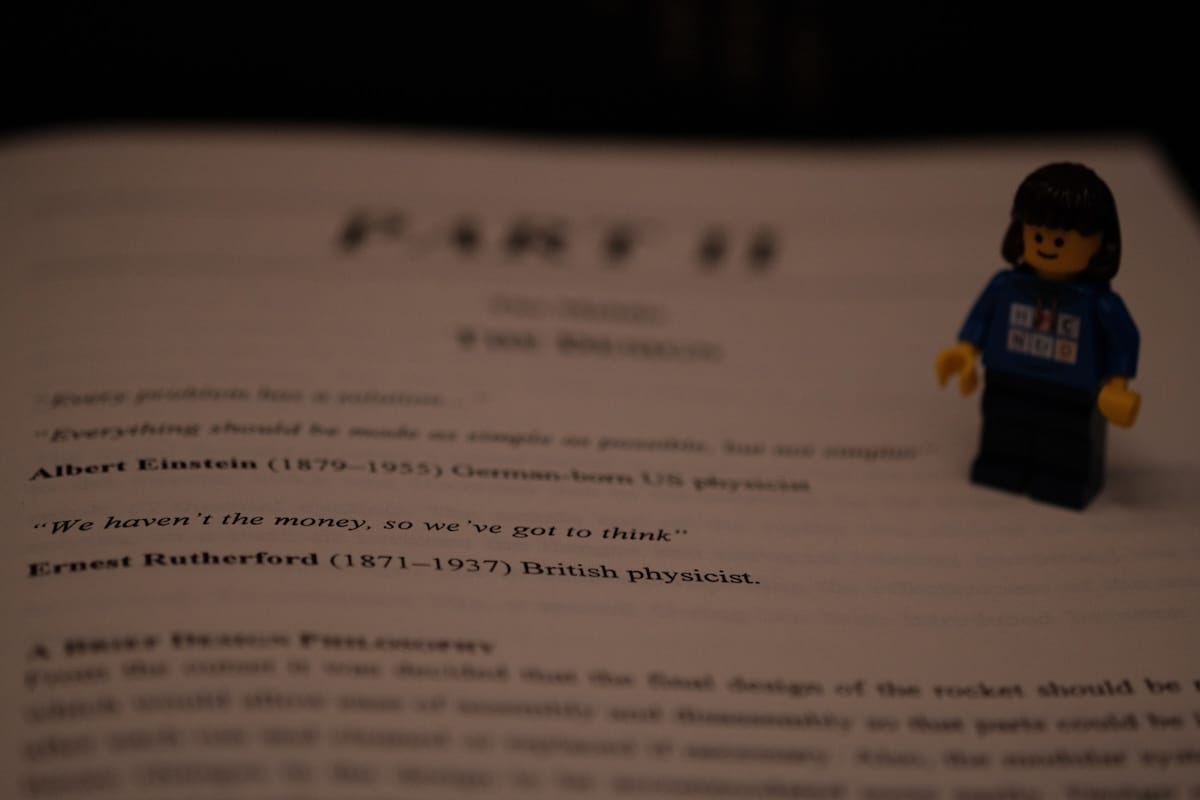
“We haven’t the money, so we’ve got to think” - Ernest Rutherford
I’m not sure long I’ll stick with this, but I thought I might share some of the internal dialogue and thoughts that eventually turn into the slightly more refined ideas (which aren’t exactly well formed anyway!!) that I do usually write about.
I first came across the quote above as an undergrad working on my Master of Engineering. The picture is from the finished report that still sits on shelf behind my desk.
More recently, I was speaking with a friend about frugality in running companies. I said I didn’t agree with the, Amazon popularised, frugality ideology whereas my interlocutor was very much for it. To the point of sleeping in churches to save a few bucks.
Yet here I am, coming back to the quote above. Thinking about the impact of venture capital on startups and if we’re really helping at all by throwing money at problems. Heck we’re not even throwing money at problems anymore, not really, we’re mostly throwing money at kids in the hope they’ll come up with something that will end up with monopolistic pricing and outsized levels of wealth creation for the initial investors. Anyway, that’s a topic for another day.
It also had me thinking about something I read where the executive team of a company tried living on minimum wage and found that the challenges of managing their daily lives on that budget stripped them of the ability to create and operate effectively. I really wanted to find the details of that again to reference it but have spent quite a few tokens on it with no luck. In fact, it seems, it may have been entirely fictional?
I’m pretty sure people, employees, need to be comfortable enough at a personal level to not have to spend their mental energy ensuring they can pay rent or feed their families (even if that previous story does turn out to be a work of fiction not fact). But I do wonder if at a corporate level access to excessive resources simply stifles creativity?
Does too much money just give us rocket powered cars as marketing exercises? Conversely, Steve Jobs wasn’t exactly eating at the soup kitchen when he gave us the iPhone.
Yet the current AI tech boom has so many examples of problems being solved incredibly inefficiently because the money was available to do so.
Perhaps the answer isn’t really very clear cut.