COREx v2.0?
I think it’s time the COREx benchmark got an update. But what needs improving?
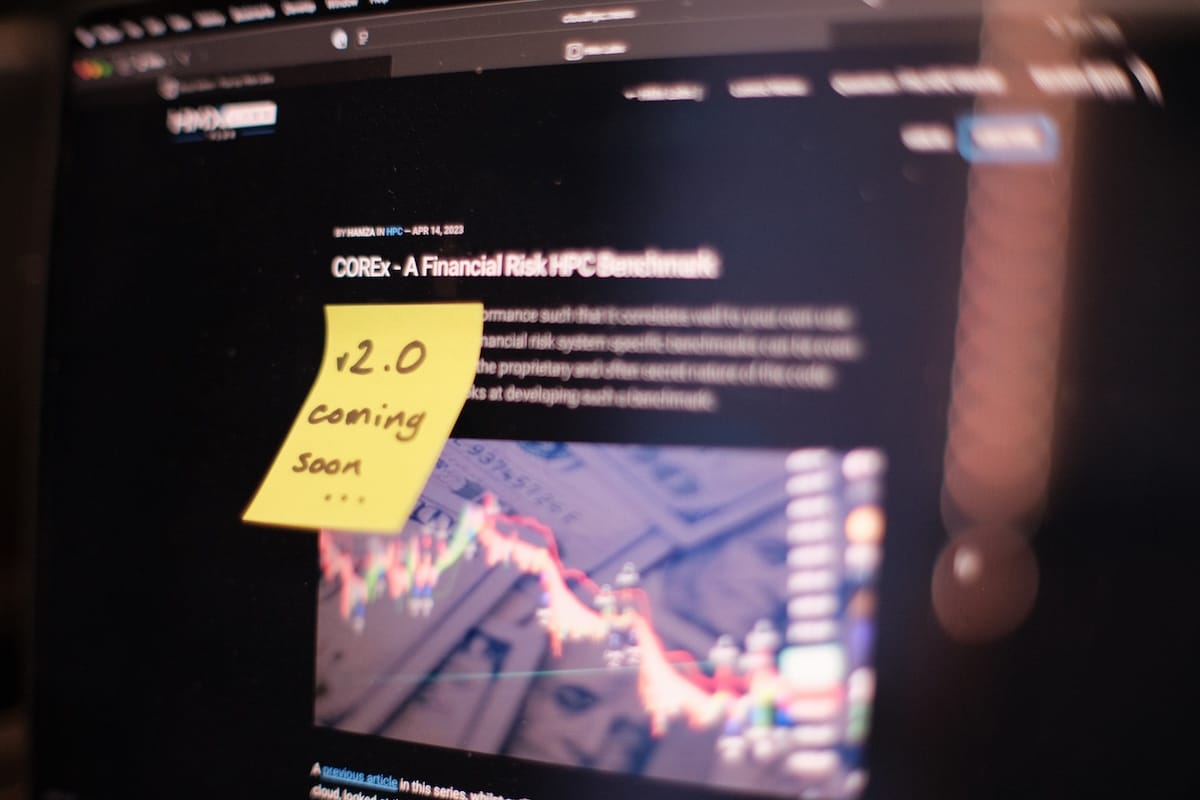
In 2023 we created the COREx benchmark. And now it’s not good enough. Time for COREx 2.0
We created it not because we thought we world needed yet another benchmark. Not because we felt we could create a better benchmark. No. We created it because there was no other benchmark for financial risk analytics workloads.
You could argue that the QuantLib benchmark already existed, but this was never really designed as a benchmark, simply test cases for the core quant library. But yes, sure I suppose I can concede that point. There is also the STAC A-2 benchmark, but this isn’t easily accessible to everyone. Critically, neither replicates a whole risk system.
So, we ended up creating COREx, something that replicated actual risk systems that run production. Not just the analytics library. Not just a single algorithm. A full risk system as it runs in the real world.
It was done on a shoestring budget and leant heavily on existing open source projects. Which is probably a good thing in the end. Importantly though, because there was no prior art, creating something was better than nothing.
It’s been 3 years. And now it’s no longer good enough.
It’s a single benchmark that is attempting to replicate multiple workload types within a broad category.
What matters for intraday and realtime risk is not what is most important for end of day risk. Market risk calculations have a very different memory and IO profile compared to portfolio risk.
It’s time for COREx v2.0.
Before we start work on this in earnest, I’d like some input from you. What matters to you in this space? Where are the results from COREx lacking for you?
Let me know.