Does Innovation Die in the Intelligence Era?
Copyright, patents and trade secrets in the age of intelligence. A look at how to appropriate value from innovation in an AI world.

Am I a Luddite[i]? Should I be one?[ii]
I’ve always known what I wanted to do. Who I wanted to be. It may have changed many times over the years, but I always had a certain clarity around my own ambitions. I was often perplexed by friends around me who lacked the same acuity of thought for their own futures.
My 8 year old self wanted to be an engineer. For some definition of engineer I guess I could argue I succeeded. But I’m pretty sure what my 8 year old self (and if I’m really honest, even my current self) wanted is to be designing and then building - real hands on wrenches building - formula one cars, hypersonic aircraft and intergalactic spaceships.
Still, I guess supercomputers is not too bad. I might be focused on other goals now, but they emerged and were adopted naturally. I didn’t go through periods of mental anguish trying to figure out what I should with my life, my time, and my skills in the way that many I have mentored over the years do.
It is therefore rather novel for me to experience this now.
It’s not so much that the goal has changed. Rather that the path to achieving it that was once so clear to me is now far from evident. Alongside that I find myself questioning some of the fundamental advice we provide to our clients. Questioning not only the modus operandi of a modern business but critically even modern society and the role of intellectual property within it.
Grandiose statements indeed. Perhaps it’s just a mid life crisis 😆
Back to my opening question. Am I a Luddite? Should I be a Luddite? Or more concretely, to phrase things in a way you dear reader may actually care about it: What is the value of any novel technology, any intellectual property, in the current environment and how does one retain the ability to appropriate value from it.
Or put more simply and personally, how do I, as the founder of a small business, continue to be able to pay my employees and feed my family!
Does my longstanding advice to my clients around using open source or vendor products (buy vs build) for what I consider to be commoditised capabilities still hold true? Will it continue to hold true?
Before I try and share some of the rabbit holes that I’ve been exploring to try and answer that question, perhaps I should share what sent me down them and why now.
Capturing the Commons
Perhaps unsurprisingly, this starts with the appropriation of every ounce of human knowledge that was accessible by OpenAI. Or as Katherine Rundell put it[iii] “an illegal pillage of human labour”.
On a side note, listening to her podcast was worth it for this one simple statement:
“The written word is not just the transcription of a pre-existing thought on paper. That when we write, we aren’t just writing out what we were already sure of, That writing is a process of transformation and of clarification. That when I write I am not always just building the thing I was sure of. I am discovering in that moment new ideas”.
She has captured something I have always felt, and not just about prose but even about code, with so much more eloquence than I could have mustered. Bravo Ms Rundell.
I think it is only fair that I really should stress this statement is true not only generally, but also about what I write in this moment. It is true about this very piece you are reading.
As I write this, I have a myriad of data points, memories from childhood and recently read academic papers on the topic in my head. What I don’t have is a clear answer and it is my hope that writing this, and sharing some of it with you, that it will help (possibly collectively) to reach one.
Perhaps what history will remember about this AI summer isn’t so much the importance of “Attention Is All You Need”[iv] and the creation of LLMs but rather how it marked the appropriation of the commons in our digital serfdom
I am of course referring to and extending the ideas proposed by Yanis Varoufakis [v].
Maybe what future narrators will remark on is how we transitioned from having already given up all our intellectually property - both willingly, and unwillingly and unwittingly - to our digital lords (think Instagram and Reddit) to them also appropriating all prior and future work without consequence.
Silicon Valley Playbook in the Intelligence Era
Future intellectual property. That’s quite the jump. Consuming all existing intellectual property is one thing, but laying claim to all future knowledge is quite another, especially, if like me, you don’t buy into the AGI cult.
Sadly, we may not need AGI in order for large corporations to continue to accelerate the trend of knowledge capture from people to capital.
On 8th September 2026 OpenAI released a statement sharing a solution to the Navier Stokes problem[vi]. Despite my aerospace background, I will resist the temptation to explain the problem for fear of losing you in an already long piece. The exact problem, the solution, or its consequences for society, really don’t have much bearing on the point I am making anyway.
12 hours prior to this release, a professor of mathematics (Tristan Buckmaster) in conjunction with another mathematician (Levant Alpoge) in the employ of Anthropic released a statement to the effect that their work had been used by OpenAI to solve the Navier Stokes problem.
OpenAI has admitted that the use of Codex by Buckmaster & Alpoge may have improved their models though not agreed to the extent of IP appropriation alleged by them.
Hold that thought for minute. (I can’t even think that phrase without Hugh Brownstone of Three Blind Men and an Elephant flashing before my eyes. If only I could turn this into a video in that style!)
A few short months earlier I was sat in the offices of a London quant trading company, at a presentation delivered by Anthropic, when someone in the audience naturally asked about the possibility of running Anthropic’s models locally (i.e. within the confines and network of their own company). Of course, this was met by a response in the negative followed by a funny but astute comment from the moderator around “mistrust all around”.
The quant firms and banks didn’t trust Anthropic to see their financial models and Anthropic didn’t trust the quants and banks with their large language models.
At least one of them has a proven ability to make money. 😁
Whilst unfortunate, I felt this was a rather sensible state of affairs. Both they buy and sell side of Wall Street (or The City of London) has always been notoriously protective about its financial models. Even when it’s not warranted!
Both OpenAI and Anthropic have shown no qualms about incorporating the businesses and revenue streams of their own customers into their own offerings, leaving a trail of not only AI wrapper companies but even established software firms in their wake. Earlier examples of this include Claude Code and Codex (remember Devin? Or potentially even Cursor) and more recently we have Claude Design (Figma) and Claude Whiteboards, Sheets and Data (Microsoft Office / Apple Office)[vii]. This is a business model that was perfected by Amazon now being played out at intellectual scale by AI Labs. I guess they need some way to justify their current valuations.
Imagine my surprise then to learn recently that the fear of missing out has proven far too great for even some of the most conservative and prudent bastions of secrecy. There are now banks at the very least (and perhaps other quant funds) that are allowing the use of USA frontier lab models on their codebases. Including their financial analytics libraries.
There is simply no need to compete, hack or steal trade secrets. Just ask nicely enough and even large secretive organisations will hand them over! A business model pioneered by Zuckerberg with Facebook is being shifted into the intelligence era.

Patents to the Rescue?
Perhaps then, what is required is something with a little more teeth to defend your intellectual property. It is certainly possible to argue that copyright law may yet result in action against AI model providers. The New York Post’s case against OpenAI and Microsoft is still pending (and the judge has denied early motions to dismiss)[viii]. Anthropic also agreed to paid authors $1.5 billion in Bartz vs Anthropic. However, the judge in that case also ruled the training of an AI model as fair use. The fine imposed pertained only to the use of illegitimately obtained and stored literature 🏴☠️. Legitimately purchased books are fair game.
Relying on copyright law to ensure appropriability of intellectual property is likely to be a fool’s errand.
Which leads us into the world of patents.
Copyrighting a work is a trivial process, one I first encountered as an undergraduate at university. My university’s advice at the time was simply to mail myself a copy of it and never open the envelope. Done. Copyright protection for the cost of a stamp. (This dates the work).
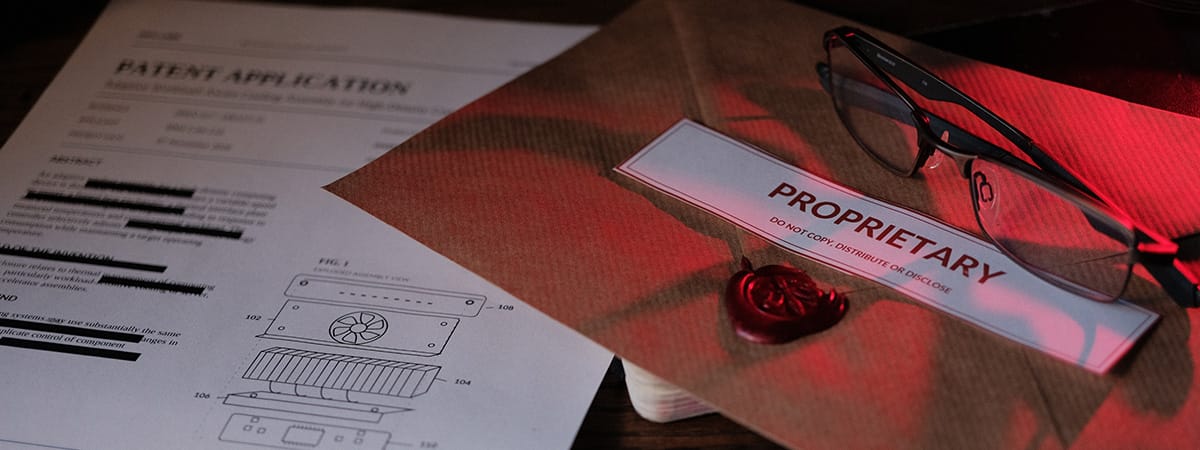
Patents are not quite as easy. Indeed, the cost to simply file a patent can be prohibitively expensive leading to most smaller companies choosing other mechanisms such as trade secrets or even time to market to appropriate value.[ix]
The cost to file the patent is only the beginning of this particular hurdle. Once a patent is granted, enforcing it becomes the responsibility of the patent holder (and their lawyers). This is a ravenously expensive chore and one that only escalates in cost with the capability of your adversary. The entire process makes patents all but unfeasible except for those who already possess the capital to defend their intellectual property.
Further, the filing of a patent requires disclosure. Which in the words of Anton & Yao:
Asymmetric information gains force when property rights are limited.
Their paper[x] and model, in 2004, stated that the level of disclosure is a function of the strength of intellectual property rights, which in itself is now a function of capital.
This inequality in the appropriability of value through patents is further confirmed in a 2019 paper by Day & Schuster[xi] who analysed over 1 millions patents to conclude that
Using an original dataset of more than 1,000,000 patents and empirical methods, we find that the patent system perpetuates inequalities between powerful and upstart firms.
Whilst an expectation of securing intellectual property through patents may be an option for our clients (large multinational banks), even for them, the increased risk created by disclosure in an era where that knowledge forms part of the training data set of LLMs pushes further towards the use of trade secrets.
I should probably state at this point that whilst I am referring to intellectual property in fairly general terms, at the back of my mind I am thinking about this mostly in the context of ourselves at HMx Labs and our clients in regards to their financial algorithms and software.
Sometimes though, trade secrets are simply not possible. If you’re selling a product for example you’re literally putting that intellectual property into the open market and have little choice but to rely on IP rights.
The addition of AI to the patents is highly unlikely to reverse the existing trend, a trend we can actually trace back hundreds of years, that concentrates knowledge into the hands of capital (despite the original intentions of patents). If anything, it is likely to further entrench the current bifurcation and asymmetry of patent rights.
How About Trade Secrets?
We live in a world where you can reverse engineer anything[xii], recreate the music, artwork or software you desire with a simple prompt and even LLM wash[xiii] open source projects to get around pesky licensing restrictions.
Whilst the cost of recreating Photoshop, Word or even the Linux kernel may have fallen substantially, the availability of free (or with less restrictively licensed) alternatives is not new. Microsoft Word has survived over twenty years of a free alternative being available with little to no impact to its market share. The existence of GIMP for even longer doesn’t seem to have hurt Adobe much either.
Clearly then, it is possible to appropriate value from innovation through complementary means, a large moat, strong lock in factors or perhaps even just plain loyalty.
There are clear examples of this from the open-source world, an area where the innovation is given away freely. HashiCorp was launched as an open-source solution to create multi cloud deployment[xiv]. Terraform, the original product was freely available, yet HashiCorp was eventually acquired by IBM for $6.4billion. They are not an outlier either.
MySQL, NGINX, GitLab, Elasticsearch and Ansible to name but a few others had similar trajectories.
This path however is not without is difficulties. All of the above had external funding in the form of venture capital. Further demonstrating the impact of the capital markets on innovation and critically, the appropriability of that innovation.
Even with capital injection though, that path has not always been easy. In 2023 HashiCorp moved from a recognised open source license to a source available license[xv]. A change that was not welcomed by the community and led to Terraform being forked to create OpenTofu. Again, this story is not unique with Redis and Valkey being another example that immediately comes to mind[xvi][xvii].
Whilst it is possible to appropriate innovation value through complementary means, there remains a substantial risk that competitors (in the above cases, big tech) are able to encroach on that revenue stream with limited recourses for the innovator.
Whilst the recreation of Adobe and Microsoft’s products using AI was certainly headline grabbing, in reality it did nothing novel and has no significant bearing on the business operations of those companies.
Where things do get a little more interesting is the ease with which firmware can now be updated to bypass restrictions placed on hardware. Business models that previously relied upon deliberately imposing a usage paradigm, for example smart TVs that collect data on their users, printers that require OEM ink are suddenly far more exposed.
Automotive companies that restricted access to diagnostic tools already had a cottage industry fighting against them. They just got handed a bazooka. Hopefully someone can point it at John Deere too.
Closing Thoughts
Whilst I may be a barefooted, yoga practicing hippy that has somehow found himself walking around the trading floors of Wall Street, I’m not going to attempt to solve the democratisation of knowledge!
I started this piece, to try and attain some clarity around how to position our own work. What we open source, what we advise our clients to buy and where we help them build. Nothing more, nothing less.
But I think it’s fair to say that LLMs and current generation of AI companies are unlikely to help (the democratisation of intelligence) despite political narrative to this effect.
I also don’t think the impact is simple. I think we will see increased asymmetry.
Well capitalised actors will benefit from not only the patent system but also the ability to enforce copyright. These are both key to retaining intellectual property especially in an era where the success of AI companies is seen to be more important than minor inconveniences such as existing IP laws. It is not so much the invention of the LLM that materially changes the innovators dilemma as much as it is accompanying political landscape that has been manufactured alongside it.
This is equally true, not only for preventing LLM training on intellectual property but also, to defend against the use of LLMs to trivially recreate competing products (irrespective of IP infringement). Be that through legal battles, customer lock in or complementary services.
The rest of the world will have to lean more heavily on trade secrets, time to market and complementary means however fraught those may be.
Perhaps somewhat counterintuitively, this is likely to push us into a world where we share less, not more. Where supposedly easier and cheaper access to intelligence will actually impede humanity’s rate of innovation. A world where we attempt to sell the outcomes of our innovation rather than the innovation - thus keeping the invention itself confidential.
Of course this isn’t always possible. But my guess is that it’s an option that will be increasingly chosen when and where it is. Artists taking on more on commissioned work, software increasingly delivering services and billing for them as such. Why sell a pill your competitors can analyse and reverse engineer when you can sell the cure administered in your own treatment centre?
Even open sourcing software to earn revenue from complementary sources becomes more difficult. In a world where it is possible to build cheaply, an open source solution needs to provide a compelling advantage to the increased supply chain risk, friction, license change risks and development velocity trade-offs that can be part and parcel of using FOSS. Open source will need to offer a compelling advantage, be that in trust, governance or simply established use.
It becomes much harder to create and appropriate value from open source because adoption in a world where code is cheap becomes more difficult. My gut feel is that open source projects under well governed structures (think Linux Foundation or Apache) will continue, but your ability to create the next HashiCorp or Redis just got a lot harder.
Perhaps the most damning conclusion for AI as a technology though is that its biggest impact has not been an increase in innovation. In fact, the biggest changes have nothing to do with the technology or its capabilities at all. They have instead been almost entirely as a result of the changes in the political and legal climate that have come with it.
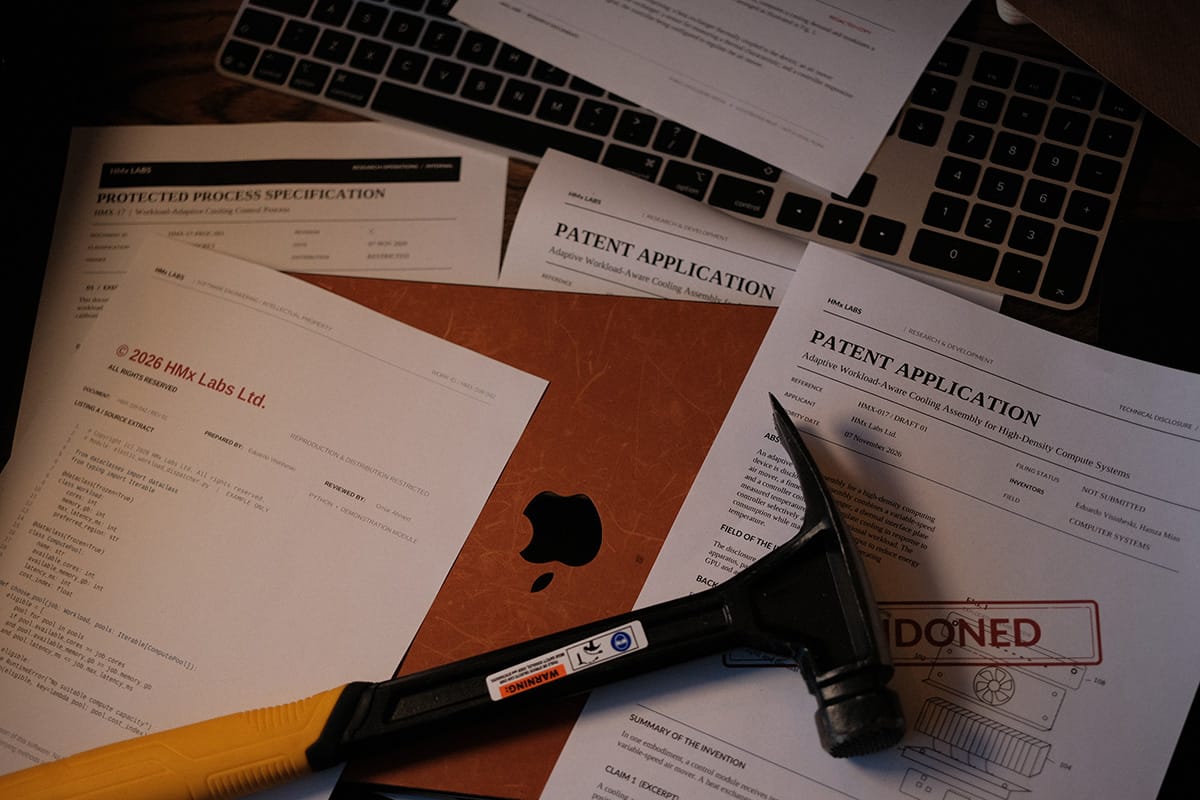
To answer my opening questions: Am I Luddite? Should I be one? Perhaps I’ll carry a hammer alongside my laptop in my day bag.
[i] https://theconversation.com/whats-a-luddite-an-expert-on-technology-and-society-explains-203653
[ii] https://www.brookings.edu/articles/we-should-all-be-luddites/
[iii] https://podcasts.apple.com/gb/podcast/the-new-society-culture-from-the-new-statesman/id1859963290?i=1000791719212
[iv] https://arxiv.org/abs/1706.03762
[v] https://www.yanisvaroufakis.eu/2024/02/04/technofeudalism-a-video-essay-summarising-the-book/
[vi] https://en.wikipedia.org/wiki/Navier–Stokes_existence_and_smoothness
[vii] https://claude.com/resources/articles/sheets-whiteboards-data
[viii] https://en.wikipedia.org/wiki/The_New_York_Times_v._Microsoft_and_OpenAI
[ix] Can’t Block, Must Run: Small Firms and Appropriability – Justin Byman, Aija Leiponen – 2006
[x] Little patents and big secrets: managing intellectual property – James J Anton, Dennis A Yao - 2004
[xi] Patent Inequality – Gregory R Day, W. Michael Schuster - 2019
[xii] https://github.com/morluto/rea
[xiv] https://www.hashicorp.com/en/resources/the-story-of-hashicorp-terraform-with-mitchell-hashimoto
[xv] https://www.hashicorp.com/en/license-faq#aug-10-announcement