The SC 120
Issue #120 of The SC. Weekly supercomputing news. More heterogeneity, more AI accelerators but also, maybe, a way to deal with them all? But should you even bother? Maybe you just pick your poison and stick with it.

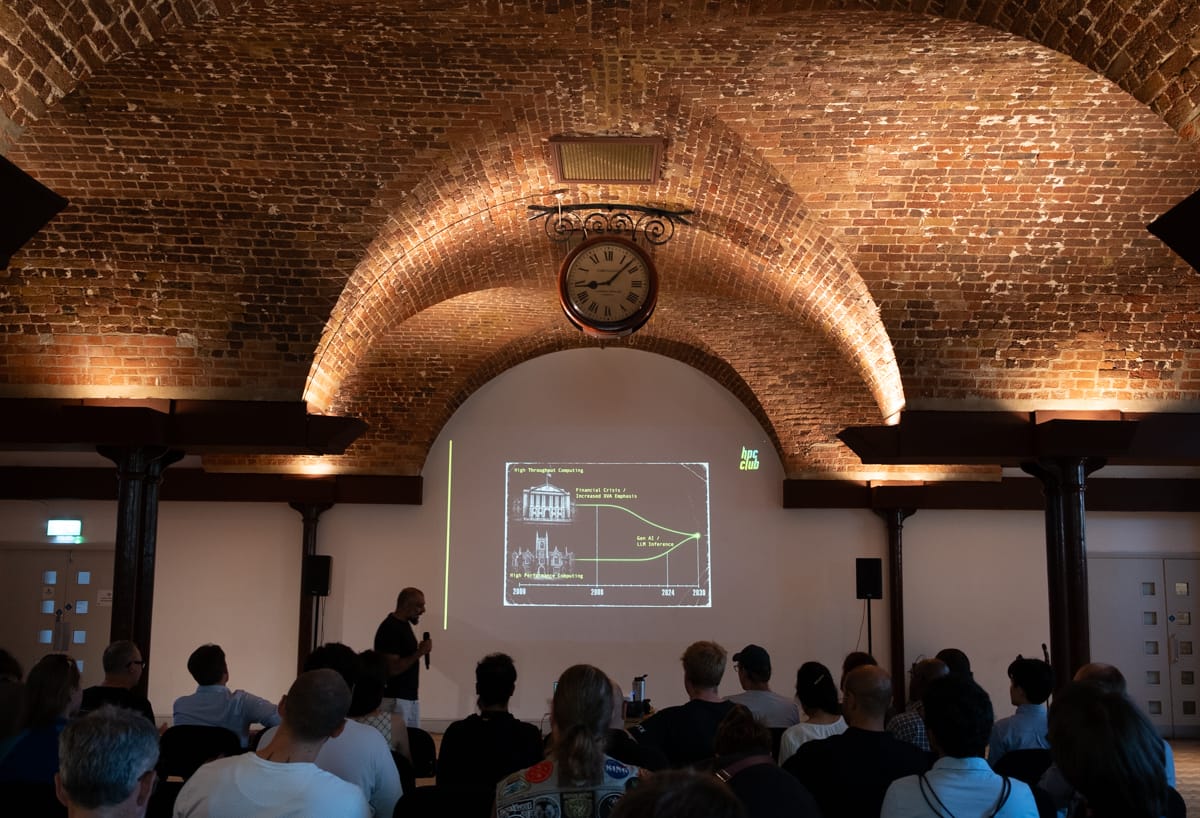
The supercomputing theme for last week seems to have been heterogeneity. Which is kind of fun because we talked about that at HPC Club last week too!
We seem to be heading towards an ever increasing diversity of compute options with both Meta and DeepSeek announcing their own accelerator for AI last week. This comes on top of Meta having already announced its intention to tape out its own ARM based CPUs earlier this year too. Being an AI player or a hyperscaler in the 20s requires your own silicon it would seem. I wonder how long that will last.
I guess it’s just as well then, that startup ZML launched its hardware agnostic LLMD that promises to run your inference across five different options including CUDA (of course), ROCm and Google’s TPUs. Interestingly, they also chose to target Apple Metal for their initial release. I guess they see a chunk of LLM inference heading to local use and this being valuable in the consumer as well as data centre space?
In many ways, the situation with Nvidia and CUDA today reminds me of Intel and MKL in the 2000s. If you were locked into the Intel + MKL ecosystem, it may have been a little painful over the last five years or so watching AMD surpass Intel in both performance and cost per calc. If you experienced that level of lock in, that is no doubt driving some of the desire we see today to gain independence from Nvidia and CUDA. I think that’s great. I would love to see an open ecosystem where it is easy to avoid vendor lock in. Let’s not kid ourselves though.
Cross platform compute is not easy and it’s not cheap. While you may be kicking yourself if you’re locked into Intel CPUs today, you were in a fantastic place for 20 odd years. You might be surprised to hear me advocating for voluntary vendor lock in. And I’m not really. What I am saying is to make your choices carefully. The alternative is not free and sometimes, provided you understand what you’re letting yourself in for, the vendor lock in can be preferable.
If you missed HPC Club last week and want to catch up on what the team at Lawrence Livermore National Lab had to say then you’ll be glad to hear you can watch it online, the details for that and the rest of the supercomputing news from last week in depth is below.
All the News in Depth
DeepSeek, with possibly a stronger reason, has also decided to make its own
ZML’s accelerator independent LLMD goes live giving us a fighting shot at being able to run our code on at least some of these accelerators without lots of rework and their own press release.
You know when there’s an outage how it’s always DNS? Well, HPC has its own rule, it’s always the data. Anyone that’s been working in supercomputing for a minute already knows this of course but it’s fun to see all the AI kids learning that lesson too.
HMx Labs Updates
Off Topic
Linus Torvalds and The Primeagen on AI written code
I like Ed Zitron but this feel pretty spot on to me
Know someone else who might like to read this newsletter? Forward this on to them or even better, ask them to sign up here: https://cloudhpc.news